
Campus events
Sustainability
Corporate 17 October 2019
Without a more sustainable economy, we risk irreparably compromising living conditions on our delicate planet. What is the impact on the environment of an espresso machine? And how can an espresso machine reduce its footprint on the environment?
For a number of years, SimonelliGroup engineers, together with researchers at Marche Polytechnic University, have been asking these two questions in an effort to make coffee machines that not only perform well, but are increasingly environmentally sustainable.
The issue of environmental compliance, which until a few years ago was little considered by food-service operators, is gradually becoming more and more important,both because the consumer is increasingly sensitive to environmental issues and because there has been a growing awareness that without a more sustainable economy, the living conditions on our delicate planet could be irreparably compromised.
Let’s then try to find out how the environmental impact of an espresso machine is assessed and then understand what solutions Simonelli Group designers have put in place to keep these values as low as possible.
One of the most common measures of the environmental damage done by an object are expressed in kilograms of CO2 equivalent.
It expresses the footprint that the product releases on the environment taking into account its manufacture, use and disposal.
The calculation of this meter is particularly complex because it takes into account, for each material that contributes to the production of the object examined, the energy required for its extraction, transformation, processing and transport. So many variables contribute to its estimation: the same material,such as could be aluminum or steel, for example, has different indices of Kg of CO2 equivalent (Kg/CO2eq) depending on whether it is extracted and processed in a country with a coal-based energy system or in a country where electricity production is through mainly renewable resources.The calculation also takes into account the type of processing carried out to obtain the material in the format required for assembly into the product examined; in the case of molding for example it will have a different impact than in the case of mechanical processing.As an example we propose (see table next page) the values concerning some materials normally used for the production of coffee machines: these values are expressed per unit of mass (1 Kg).
They show that when comparing environmental performance, in terms of KgCo2eq emitted per kg of material, aluminum, with an index of 20, has the greatest impact.This is mainly due to the large amount of energy required during the process of extracting the material from naturally available minerals, such as bauxite. Among the other materials, brass(with a coefficient of 5.52), copper (with a coefficient of 5.47), and stainless steel (with a coefficient of 4.43) are found to have impacts approximately three times greater than carbon steel, which has a coefficient of 1.85. As for polymeric materials, there is considerable variability in impacts, from about8 kg of Co2eq of PA66 and PC to only 2kg of CO2eq of PP, and this depends both on the manufacturing process and the chemical elements in the polymer formulation.
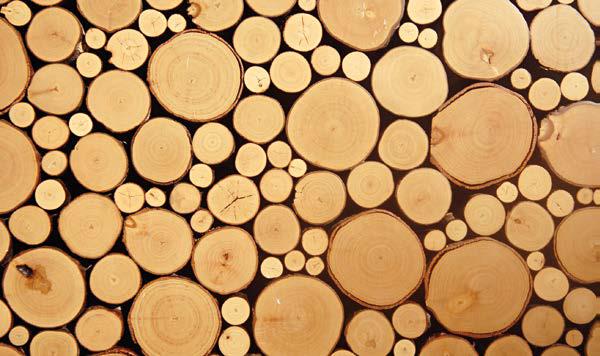
The materials with the least environmental impact are glass, which has a coefficient of 1.03, and wood, which has0.09.
Engineers, in designing the machine, cannot stop at this initial information, since the specific gravity and physical-mechanical characteristics of the various materials turn out to be different; making the same component from stainless steel or aluminum or polymeric material means significantly changing the mass of material used. In fact, the specific weight of metallic materials (8.9 kg per dm3 of copper/brass,or 7.8 kg per dm3 of carbon or stainless steels) turns out to be higher than that of aluminum(which has a density of about 2.7kg per dm3) and even more than that of polymeric materials (around 1 kg per dm3).This means, for example, that making a component from a plastic material will have
a significantly lower weight than the same one made of stainless steel or brass.Going to compare the impacts of the various materials on unit volume (see table below), the graph takes on a different pattern. The heavier materials, (copper, brass,steel) almost equalize the impacts of aluminum, while the polymeric materials turn out to have lower impacts due to their lower density.
But in addition to the different amount of material used, and therefore the different weight, the physical-mechanical performance of the materials also changes, so where the same performance needs to be guaranteed, see for example the ability to withstand a given pressure (the 9bar of hot water), the component must be sized differently depending on the material used.Copper, for example, has a lower mechanical strength capacity than stainless steel, so in order to guarantee the same sealing properties with copper, much greater thicknesses must be used. For each component in design, other physical properties of each individual material must also be taken into account.In the case, for example, of a component that is to perform an insulating function, interchangeability between one material and another occurs with the same conductivity coefficient.
Further complicating the work of engineers is another aspect.Depending on the function of use of the component, the sanitary and safety aspect of the component must also be taken into account. The use of glass, for example, is discouraged in many cases because of its high fragility and consequent danger in case of breakage,while the use of wood is discouraged uncertain uses because of a hygienic difficulty and consequent bacterial proliferation.
These aspects are important in the design of coffee machines because they are tools for the production of beverages that are consumed by humans and therefore must at the same time ensure maximum hygienic-food safety.An additional factor to be taken into account is the possibility of material recovery at the end of the product’s life cycle. Some materials can indeed be recovered,while others are difficult to recover,because,for example,they are combined with other materials to make up alloys or other kinds of compounds that are difficult to recover with current technologies.
Moreover, even where there are not these kinds of technical difficulties, not all materials are recovered in any case, so that only a portion of what is potentially recoverable is then actually recycled, sometimes perhaps because at the end of its life the product is dumped in a landfill and therefore without any recovery, sometimes because the traceability of the product itself is lost and therefore it is unknown where it ended up, sometimes because the costs of recovery are higher than the commercial value of the material itself etc. So many can be the reasons that hinder the full recovery of materials in a machine, and these reasons vary from country to country, just as the probability of recovery of various materials varies from country to country. This means that the same machine if it ends its life cycle in the U.S. for example, will have a different amount of material recovered than the same one that ended its life cycle in China, or Russia or Europe or Iraq or Japan.
In order to take this variable into account as well,engineers resort to international statistics based on historical data,which indicate the average percentage of recovery of each type of material in the various nations. According to these statistics, in Italy for example, an average of 70 percent of copper and ferrous materials is recovered, a somewhat smaller percentage for aluminum(around 50 percent) and an even smaller portion (25 percent) for brass, while the share of recovery of polymeric materials we find to be completely insignificant.
The total impact of each material used will therefore be equal to the algebraic sum between the value of equivalent KgCO2 for its production and the recoverable portion at the end of the product’s life.
To assess the impact of a coffee machine, it will be necessary to add together these weighted values to the mass of each material within the product.
Making the engineers’ job even more complex is the energy efficiency performance of the machine when it is in operation. The more a machine has lower energy consumption for the same performance, the more environmentally efficient it will be.
Any choice of material will then have repercussions on the performance and efficiency of the machine, so while engineers need to cut down on the environmental impact of the product, they also need to ensure the same performance as a machine of the same level. At least that is the case for Simonelli Group engineers.
Stories
Campus events
Sustainability

Campus events
Corporate
Training

Campus events
Training
Corporate

Campus events
Corporate
Corporate
Corporate

Campus events
Corporate